Patrice Chéreau's Gabrielle, with—as Beverly Berning has noted in her program capsule—its ready comparison to Ingmar Bergman's Scenes From A Marriage, was just opening in Paris when I was there last September, trailers were screening in the cineplexes and posters were ubiquitous in the metro, so out of a sense of nostalgia I felt compelled to catch the screening at Pacific Film Archives. Press had been teased that Isabelle Huppert might actually attend so I also went on the slim chance that tease would manifest. Alas, no Isabelle. Nor, if I understand correctly, will she be showing up for the Pacific Film Archive's Huppert June retrospective. A pity. I would have loved to have seen her in her incandescent pale flesh.
Winning a special jury acting award at the 2005 Venice International Film Festival, even though the film itself was assailed with boos after its screening, Huppert maneuvers Chéreau's cumbersome chamber drama with customary aplomb. Shifting from a restricted interiority to a scandalously candid resignation, she is a complete pleasure to observe even as she withholds motivations. The skin beneath her left eye flinches in nervous recognition of distasteful insights. Her nostrils flare as if the atmosphere of her strictured life smells foul.
As Moira Sullivan reported to the Greencine Daily from the Venice International, "Patrice Chéreau's Gabrielle, based on Joseph Conrad's The Return, proves to be an overambitious project that literally doesn't work on screen." One of the film's primary problems is "the decision to project letters and plot developments onscreen as text. The effect is poor, even embarrassing for its lack of ingenuity." I must agree, as does Daniel Kasman, reporting last September from the 43rd New York Film Festival who felt Gabrielle was "inconsistently energized by title cards yelling dialog [her husband] Jean fails to say."
Kasman, however, does commend one of the film's best scenes, and perhaps the gist of Joseph Conrad's concept of "the return": "[P]erhaps the most incisive and invigorating remark in this dully antiquated drama is a rare moment of self-inquiry from Gabrielle . . . who tells her husband that loving the man she was going to run off with was 'too demanding' and that if she truly loved Jean she could not have been able to return; she is only able to come back, face him, and live life as normal because their lack of love makes such interactions easier. These are stunning spoken admissions, and ones far more candid and insightful than any of Jean's bumbling attempts to explain or repair the clarity of his marriage's loveless basis."
Though writing about Hou Hsiao-hsien's Three Times, Juan Manuel Freire notes: "The initially intrusive use of silent movie subtitles becomes another successful stylistic flourish, emphasizing the artifice of intercourses in a society that hides every passion and truth beneath luxurious costumes and furniture." In regretful hindsight, I wish I could have seen Three Times to compare these stylistic intertitular flourishes with Gabrielle. A pity they were not more successful in the latter.
What worked for me the best, however, along with Huppert in the title role, was the film's disturbing score by Fabio Vacchi. Reminiscent of Hermann's work for Hitchcock, the score leant an anguished and jolting anxiety to the film's depiction of social complacency.
Sunday, 30 April 2006

2006 SFIFF—The Evening Class Interview With Lev Yilmaz
At the opening night party—inbetween my first Skyy martini that was already enough and my third which made me thirsty for a fourth—I was introduced by my filmbud Gustavo Fernandez to Lev Yilmaz, creator of Tales of Mere Existence, which will be included among the collection of animated shorts—Drawing Lines—this coming Thursday noon at the Kabuki. Sample sketches of Tales of Mere Existence—"The Times I Have Smoked Pot", "Horny", "My Successful Friends", "Goodlooking" and "Pickle"—can be found online. They only whetted my appetite, however, so Gustavo loaned me his copies of the first two dvds of Tales of Mere Existence available from Lev's website. I found them hilarious and approached Lev for an interview.
* * *
The Evening Class: How did you start going with Tales of Mere Existence? Did you have training in college?
LY: To a degree. I went to art school. I didn't really study film. I studied art video and other forms of drawing, painting and whatnot. I really did wind up adding an unusual approach to it. I never learned anything about doing the proper narrative. I've been doing my own video work for a while and then I did the first piece in this style just completely as an experiment. But it was so simple and it was so much fun that I just did another one. And then after maybe about three or four I started thinking that it actually could be a series because I had never really done anything that was a series before. So through the evolution of that I think is really when that—the more I did it—the more important the story became to me every time and now it winds up being absolutely the top of everything. Everything is very story-oriented.
EC: A perfect voice for you! Just as an aside, have you seen Art School Confidential?
LY: Sure.
EC: What'd you think? Any similar experiences with that?
LY: Some. Weirdly enough, even though I did go to art school, I think I related to Ghost World more. Art School Confidential has, perhaps, a lot more normal moviemaking sensibilities to it. To me, anyway, Ghost World was one of the greatest little portraits of this general sort of alienation that really really hit home to me, probably I think one of the best documents—one of the really best high-profile documents of freak pride that I've ever seen.
EC: The technique that you use in your animation, how would you describe it? Is it parchment paper you're using?
LY: I actually completely lifted the technique really from an obscure old arthouse movie called The Mystery of Picasso where the filmmaker [Clouzot] spent a few days with Picasso in his studio. Picasso painted on transluscent canvases and [Clouzot] shot him from the other side, shot the canvases from the other side. I sort of took that and just added narration to it. Naturally, my drawing style is incredibly crude and I only care about getting the point across then I will stop the drawings there.
EC: The point getting across is the point! The narrative. I'm sure Picasso did not have your acerbic witty narrative.
LY: He made up for it in other ways. [Laughter.]
EC: That's what is pleasing people. When I first saw it I just busted a gut because there's something about the combination of the simplicity of the line drawings in process, and then the voiceover. So what I was wondering was, do you film first, and then you add soundtrack?
LY: Oh no. The part that takes the longest is definitely getting the story right. It's not just getting the story right, but it's also just making sure that there isn't a single wasted word in there. Generally the way that I'll do it is I'll write it and then I'll do a mock recording. I'll just read it out, and then I'll listen to it, I'll listen to it a few times. Usually, I'll drink about a half bottle of wine. I figure if it holds my attention if I'm half-drunk it will hold anybody's attention when they're completely sober.
EC: So it's real-time as it's filmed? You're actually drawing and talking at the same time?
LY: No. Because I record the soundtrack first.
EC: Gotcha. That's what I was wondering about.
LY: If there's any animator in the world who doesn't record the soundtrack first, I don't know about them. Somebody must do it but very very few people do.
EC: That just draws focus on just how excellent the timing of the editing is, the way you've already structured a picture and then just add a few things, then the voiceover, it's so skillfully done. Are you really that character? Who is that character?
LY: It's definitely like, y'know, it's part of me. I think as a person I definitely cope better than I think the character does but it's probably definitely the part of me that doesn't feel like coping. That sort of thing.
EC: What I like about him is he's a guy with dark thoughts. Your portraits of envy, of bitterness, of jealousy are acute and spot on. I was watching it again for about the fifth time, every time I show it to a new friend because I keep turning them on to it, and it's always interesting to me to see them go, "I know that! I know that!" Especially the most popular ones are "Procrastination". Everybody knows that one. I've had several guys relate to the one about the ex-girlfriends and the sex they're having with their current partners. A lot of people like that one. I've only seen the first two and you have a third one coming out?
LY: Yeah, it's going to be coming out pretty soon. The more that it goes on, the more that it expands. And probably my favorite piece which I am going to be showing on Thursday at the festival is a piece called "Conversation" that is probably one of my favorite episodes of the series, I think. It's different because it's a conversation between two people and I'm saying, "And then I said" "and then she said" and just kind of narrating it out like that. But it's the conversation that the couple has in the video store trying to figure out what to rent and it winds up completely bringing up all this fucked up stuff that's happened in their relationship.
EC: Great! So where do the ideas come from?
LY: Where do you think that one came from?! [Laughter] I almost didn't have to write that one. That one was taken moreorless verbatim from a conversation with a girl … a wonderful girl that I was with for a few years, but it didn't work out. But it was taken essentially verbatim from that.
EC: I enjoy the pacing of the humor. Especially I noticed by the second one, I watched the first one and you had developed certain ideas, but by the second one you got a little tighter and you started to do this very rapid delivery. The timing is hilarious. Do you have certain comics that you emulate or that you picked that up from, that kind of comic timing?
LY: The funny thing is that a lot of the influences that I wound up having are influences of probably a generation before mine. I was very much a loner when I was a kid so the sorts of things that … and really, more than watching t.v., I stole a bunch of my dad's old comedy records so that a lot of—I bet you that a lot of the pacing kind of comes from just listening to comedians from the early 60s. I was a huge huge fan of the early Bill Cosby comedy records, the ones that he did before he became America's favorite t.v. dad. He was just an outstanding stand-up comedian, a storyteller really. Him, and a bunch of old Mike Nichols and Elaine May records. It's just something that I began to just sort of … the more that I was playing with material of my own, I began to really realize that even a quarter of a second can be the difference between not funny and funny.
EC: Exactly! That's what I'm saying. The timing is impeccable and it's counterpointed against a drollness, kind of a throwaway delivery. That's what makes it work. It's perfect.
LY: The droning delivery, that I definitely started in the early pieces. Everybody starts from somewhere and that delivery was absolutely influenced by Stephen Wright but then it changed after a while, it really evolved.
EC: Tell me about the Comedy Central gig; what's that about?
LY: What happened was that I was on a—it still shows every once in a while, I don't think very often—but it was this late-night stoner program called Jump Cuts. Usually when they first brought it out it was on at midnight and now every once in a while still they'll have—they only made four episodes of this thing, I was in all four episodes—but now they have marathons every once in a while starting at two and ending at four and just show all four episodes of Jump Cuts. Since then, now that a lot of the material is out on their podcasts, you can get it online. If you find it, let me know. I don't have a video Ipod so I haven't actually even seen it myself.
EC: I'll go looking for it. You're primarily a completely independent entrepreneur, right?
LY: Absolutely, I'm a one-man band.
EC: I'm impressed with that. How is the website working for you?
LY: My website?
EC: Yeah, do you have outreach? Are you getting orders through the website?
LY: Absolutely! That's one of the things that's been pretty amazing is that I've really managed to move a remarkable number of copies of the books. It is completely doing it myself. I'm surprised that it's worked as well as it has. I'm not really part of the comics community much but guys in the comics community have said that the number of copies I've been able to sell just entirely by myself without a distributor even has been very competitive to like the average—not like a Marvel comic release but an alternative comic release—that I've really given them a run for their money.
EC: That's great! Is that an independence you want to maintain or are you looking for a distributor?
LY: I would love to find a distributor! I would love to find a publisher! The thing is people are just … how easy do you think it was for the first guy who invented the smoothie to get it off the ground? It's an apple, right? No, it's not, it's kind of an apple and an orange. But is it an orange or is it an apple, I can't tell? People will freak and fuck out anytime you do anything that is even a little bit out of the ordinary like that. It's been hard to get your normal comic strip distributors or your book distributors to pay any attention to it. If I don't find a distributor, it's really not that bad to continue to do it myself. Whatever.
EC: Would you do stand-up comedy, anything like that? Is that something you'd be interested in?
LY: When I hear the term "stand-up comedy" I practically twitch because I've seen so few stand-up comedians that I really like. But I've got a great admiration—instead of stand-up comedy I kind of wonder when I don't know if I want to carry on this form of thing—I wonder if storytelling appears to sort of work in this same kind of vein, closer to the way when you hear David Sedaris talking, it's hilarious, his delivery is great.
EC: Or Guy Maddin! Have you heard Guy Maddin?
LY: I'm not sure.
EC: He's hilarious.
LY: The ones that I've heard the most of is mainly Sedaris. I've heard Douglas Adams reading a few of his books, which were wonderful, so I wonder about that. I've started to give that a little bit of thought. I've done … there's a few … because I've started to do it actually, to do some storytelling live, and it's totally fucking nervewracking but it's also an awful lot of fun.
EC: Where do you do that?
LY: You're a local, right?
EC: Yes.
LY: I did Porchlight once and that was a blast! It was really really a lot of fun. And then I did a reading over at—I don't even remember what the show was—sometime late last year. And then did it again over at some smaller places, these like small performances that my friend puts on. But I'm thinking about getting more into it.
EC: Do you ever go to the Bad Movie nights at the Dark Room on Mission?
LY: Jesus Christ, of course!
EC: You would be a great funny guest commentator. You know how they have three or four guys, usually in front, commenting on the movie?
LY: You know something? There are very different kinds of senses of humor that people have. I'm not one of those people. I'm lucky that, occasionally, if I'm really comfortable with people then I can be a fast commentator. Do you ever know some of those people who are incredibly incredibly funny on their feet and can react and respond to anything and really make you laugh? And you would think, wow, I betcha this person would be a great comedy writer! It almost never works. Because since their sense of humor they're able to express in this way, they don't have a need to express it in another way. The people who are funniest on paper are just because they're frustrated, they can't think fast enough on their feet, they're funny in another way, another avenue. It's something I've seen a million times. There are exceptions of course, but, it's a tendency I've seen.
EC: You have the third disk coming out. So what's in your future? What are you aiming for? What do you see going on?
LY: I would really like the most if I could find a publisher or distributor or whatnot. I wonder if it would happen easier actually in Europe rather than here because the stuff has gone over rather well in America but the audiences respond even stronger in Europe.
EC: You've tested that?
LY: I actually did a little French tour early last year!
EC: Cool! That's cool! I think you're one of the finest young comic talents that I've seen in a long time. And I watch a lot. I really appreciate that you give me the time to talk a little bit. I want to watch what you do. I'll definitely see you this coming Thursday at noon!
* * *
The Evening Class: How did you start going with Tales of Mere Existence? Did you have training in college?
LY: To a degree. I went to art school. I didn't really study film. I studied art video and other forms of drawing, painting and whatnot. I really did wind up adding an unusual approach to it. I never learned anything about doing the proper narrative. I've been doing my own video work for a while and then I did the first piece in this style just completely as an experiment. But it was so simple and it was so much fun that I just did another one. And then after maybe about three or four I started thinking that it actually could be a series because I had never really done anything that was a series before. So through the evolution of that I think is really when that—the more I did it—the more important the story became to me every time and now it winds up being absolutely the top of everything. Everything is very story-oriented.
EC: A perfect voice for you! Just as an aside, have you seen Art School Confidential?
LY: Sure.
EC: What'd you think? Any similar experiences with that?
LY: Some. Weirdly enough, even though I did go to art school, I think I related to Ghost World more. Art School Confidential has, perhaps, a lot more normal moviemaking sensibilities to it. To me, anyway, Ghost World was one of the greatest little portraits of this general sort of alienation that really really hit home to me, probably I think one of the best documents—one of the really best high-profile documents of freak pride that I've ever seen.
EC: The technique that you use in your animation, how would you describe it? Is it parchment paper you're using?
LY: I actually completely lifted the technique really from an obscure old arthouse movie called The Mystery of Picasso where the filmmaker [Clouzot] spent a few days with Picasso in his studio. Picasso painted on transluscent canvases and [Clouzot] shot him from the other side, shot the canvases from the other side. I sort of took that and just added narration to it. Naturally, my drawing style is incredibly crude and I only care about getting the point across then I will stop the drawings there.
EC: The point getting across is the point! The narrative. I'm sure Picasso did not have your acerbic witty narrative.
LY: He made up for it in other ways. [Laughter.]
EC: That's what is pleasing people. When I first saw it I just busted a gut because there's something about the combination of the simplicity of the line drawings in process, and then the voiceover. So what I was wondering was, do you film first, and then you add soundtrack?
LY: Oh no. The part that takes the longest is definitely getting the story right. It's not just getting the story right, but it's also just making sure that there isn't a single wasted word in there. Generally the way that I'll do it is I'll write it and then I'll do a mock recording. I'll just read it out, and then I'll listen to it, I'll listen to it a few times. Usually, I'll drink about a half bottle of wine. I figure if it holds my attention if I'm half-drunk it will hold anybody's attention when they're completely sober.
EC: So it's real-time as it's filmed? You're actually drawing and talking at the same time?
LY: No. Because I record the soundtrack first.
EC: Gotcha. That's what I was wondering about.
LY: If there's any animator in the world who doesn't record the soundtrack first, I don't know about them. Somebody must do it but very very few people do.
EC: That just draws focus on just how excellent the timing of the editing is, the way you've already structured a picture and then just add a few things, then the voiceover, it's so skillfully done. Are you really that character? Who is that character?
LY: It's definitely like, y'know, it's part of me. I think as a person I definitely cope better than I think the character does but it's probably definitely the part of me that doesn't feel like coping. That sort of thing.
EC: What I like about him is he's a guy with dark thoughts. Your portraits of envy, of bitterness, of jealousy are acute and spot on. I was watching it again for about the fifth time, every time I show it to a new friend because I keep turning them on to it, and it's always interesting to me to see them go, "I know that! I know that!" Especially the most popular ones are "Procrastination". Everybody knows that one. I've had several guys relate to the one about the ex-girlfriends and the sex they're having with their current partners. A lot of people like that one. I've only seen the first two and you have a third one coming out?
LY: Yeah, it's going to be coming out pretty soon. The more that it goes on, the more that it expands. And probably my favorite piece which I am going to be showing on Thursday at the festival is a piece called "Conversation" that is probably one of my favorite episodes of the series, I think. It's different because it's a conversation between two people and I'm saying, "And then I said" "and then she said" and just kind of narrating it out like that. But it's the conversation that the couple has in the video store trying to figure out what to rent and it winds up completely bringing up all this fucked up stuff that's happened in their relationship.
EC: Great! So where do the ideas come from?
LY: Where do you think that one came from?! [Laughter] I almost didn't have to write that one. That one was taken moreorless verbatim from a conversation with a girl … a wonderful girl that I was with for a few years, but it didn't work out. But it was taken essentially verbatim from that.
EC: I enjoy the pacing of the humor. Especially I noticed by the second one, I watched the first one and you had developed certain ideas, but by the second one you got a little tighter and you started to do this very rapid delivery. The timing is hilarious. Do you have certain comics that you emulate or that you picked that up from, that kind of comic timing?
LY: The funny thing is that a lot of the influences that I wound up having are influences of probably a generation before mine. I was very much a loner when I was a kid so the sorts of things that … and really, more than watching t.v., I stole a bunch of my dad's old comedy records so that a lot of—I bet you that a lot of the pacing kind of comes from just listening to comedians from the early 60s. I was a huge huge fan of the early Bill Cosby comedy records, the ones that he did before he became America's favorite t.v. dad. He was just an outstanding stand-up comedian, a storyteller really. Him, and a bunch of old Mike Nichols and Elaine May records. It's just something that I began to just sort of … the more that I was playing with material of my own, I began to really realize that even a quarter of a second can be the difference between not funny and funny.
EC: Exactly! That's what I'm saying. The timing is impeccable and it's counterpointed against a drollness, kind of a throwaway delivery. That's what makes it work. It's perfect.
LY: The droning delivery, that I definitely started in the early pieces. Everybody starts from somewhere and that delivery was absolutely influenced by Stephen Wright but then it changed after a while, it really evolved.
EC: Tell me about the Comedy Central gig; what's that about?
LY: What happened was that I was on a—it still shows every once in a while, I don't think very often—but it was this late-night stoner program called Jump Cuts. Usually when they first brought it out it was on at midnight and now every once in a while still they'll have—they only made four episodes of this thing, I was in all four episodes—but now they have marathons every once in a while starting at two and ending at four and just show all four episodes of Jump Cuts. Since then, now that a lot of the material is out on their podcasts, you can get it online. If you find it, let me know. I don't have a video Ipod so I haven't actually even seen it myself.
EC: I'll go looking for it. You're primarily a completely independent entrepreneur, right?
LY: Absolutely, I'm a one-man band.
EC: I'm impressed with that. How is the website working for you?
LY: My website?
EC: Yeah, do you have outreach? Are you getting orders through the website?
LY: Absolutely! That's one of the things that's been pretty amazing is that I've really managed to move a remarkable number of copies of the books. It is completely doing it myself. I'm surprised that it's worked as well as it has. I'm not really part of the comics community much but guys in the comics community have said that the number of copies I've been able to sell just entirely by myself without a distributor even has been very competitive to like the average—not like a Marvel comic release but an alternative comic release—that I've really given them a run for their money.
EC: That's great! Is that an independence you want to maintain or are you looking for a distributor?
LY: I would love to find a distributor! I would love to find a publisher! The thing is people are just … how easy do you think it was for the first guy who invented the smoothie to get it off the ground? It's an apple, right? No, it's not, it's kind of an apple and an orange. But is it an orange or is it an apple, I can't tell? People will freak and fuck out anytime you do anything that is even a little bit out of the ordinary like that. It's been hard to get your normal comic strip distributors or your book distributors to pay any attention to it. If I don't find a distributor, it's really not that bad to continue to do it myself. Whatever.
EC: Would you do stand-up comedy, anything like that? Is that something you'd be interested in?
LY: When I hear the term "stand-up comedy" I practically twitch because I've seen so few stand-up comedians that I really like. But I've got a great admiration—instead of stand-up comedy I kind of wonder when I don't know if I want to carry on this form of thing—I wonder if storytelling appears to sort of work in this same kind of vein, closer to the way when you hear David Sedaris talking, it's hilarious, his delivery is great.
EC: Or Guy Maddin! Have you heard Guy Maddin?
LY: I'm not sure.
EC: He's hilarious.
LY: The ones that I've heard the most of is mainly Sedaris. I've heard Douglas Adams reading a few of his books, which were wonderful, so I wonder about that. I've started to give that a little bit of thought. I've done … there's a few … because I've started to do it actually, to do some storytelling live, and it's totally fucking nervewracking but it's also an awful lot of fun.
EC: Where do you do that?
LY: You're a local, right?
EC: Yes.
LY: I did Porchlight once and that was a blast! It was really really a lot of fun. And then I did a reading over at—I don't even remember what the show was—sometime late last year. And then did it again over at some smaller places, these like small performances that my friend puts on. But I'm thinking about getting more into it.
EC: Do you ever go to the Bad Movie nights at the Dark Room on Mission?
LY: Jesus Christ, of course!
EC: You would be a great funny guest commentator. You know how they have three or four guys, usually in front, commenting on the movie?
LY: You know something? There are very different kinds of senses of humor that people have. I'm not one of those people. I'm lucky that, occasionally, if I'm really comfortable with people then I can be a fast commentator. Do you ever know some of those people who are incredibly incredibly funny on their feet and can react and respond to anything and really make you laugh? And you would think, wow, I betcha this person would be a great comedy writer! It almost never works. Because since their sense of humor they're able to express in this way, they don't have a need to express it in another way. The people who are funniest on paper are just because they're frustrated, they can't think fast enough on their feet, they're funny in another way, another avenue. It's something I've seen a million times. There are exceptions of course, but, it's a tendency I've seen.
EC: You have the third disk coming out. So what's in your future? What are you aiming for? What do you see going on?
LY: I would really like the most if I could find a publisher or distributor or whatnot. I wonder if it would happen easier actually in Europe rather than here because the stuff has gone over rather well in America but the audiences respond even stronger in Europe.
EC: You've tested that?
LY: I actually did a little French tour early last year!
EC: Cool! That's cool! I think you're one of the finest young comic talents that I've seen in a long time. And I watch a lot. I really appreciate that you give me the time to talk a little bit. I want to watch what you do. I'll definitely see you this coming Thursday at noon!
Saturday, 29 April 2006
2006 SFIFF—Artists on Other Artists
Jean-Claude Carrièr on Luis Buñuel:
I was a priest in Diary of A Chambermaid, and in The Milky Way a little later I was a bishop, up in the hierarchy. Buñuel was telling me all the time, "You're a very good actor, very good, but only for ecclesiastic professions, don't try to play anything else." So one day in another film not made by Buñuel I played—because we were lacking money—I played a veterinarian, y'know? A vet. We showed the film to Buñuel, we liked it, the film was full of animals, an interesting French film. At the end I asked Buñuel, "How did you like my acting?" And he said, "You're a very very good actor, but only for ecclesiastics and veterinarians."
Carrièr quotes Buñuel: "We always have to follow people who are looking for truth and run away from people who have found it."
* * *
Tilda Swinton on Derek Jarman:
I was asked yesterday some question about my time with Derek Jarman and I had a strange kind of wormhole moment when I … for a second my mind imagined—but really only for a split second—my own history without having met him. It was the strangest experience. He's kind of in my dna I think. The privilege of having met him and lived alongside him for nine years, I don't know, I'd also been looking for him on some level. He lit a torch and so many of us who knew him, worked with him, were young at the time and he was our first experience of not only making cinema but making art …. He was really a parent and I mean that in the least creepy way. He was extraordinary as I sort of maybe tried one version of a letter to him actually. I think it's possibly because of my letter to him that Graham [Leggat] might have asked me to come tonight. …That letter to Derek was trying to bring him up to date with what might have happened in the last—at that stage it had been eight years since he unaccountably left the building—and it's still difficult to believe that he has, but, there was this very strange time after he had when it really felt like all of us couldn't really do very much. Slowly we started to wake up again. His effect was to channel something, which was just the idea of living as an artist like him, more really than what he was doing. The fact that he was doing anything at all in the way in which he did it, particularly at the time at which he did it, was really a privilege to be around. He taught us all to be lawless or encouraged us all to believe in our own lawlessness, which I can't recommend more highly.
I was a priest in Diary of A Chambermaid, and in The Milky Way a little later I was a bishop, up in the hierarchy. Buñuel was telling me all the time, "You're a very good actor, very good, but only for ecclesiastic professions, don't try to play anything else." So one day in another film not made by Buñuel I played—because we were lacking money—I played a veterinarian, y'know? A vet. We showed the film to Buñuel, we liked it, the film was full of animals, an interesting French film. At the end I asked Buñuel, "How did you like my acting?" And he said, "You're a very very good actor, but only for ecclesiastics and veterinarians."
Carrièr quotes Buñuel: "We always have to follow people who are looking for truth and run away from people who have found it."
* * *
Tilda Swinton on Derek Jarman:
I was asked yesterday some question about my time with Derek Jarman and I had a strange kind of wormhole moment when I … for a second my mind imagined—but really only for a split second—my own history without having met him. It was the strangest experience. He's kind of in my dna I think. The privilege of having met him and lived alongside him for nine years, I don't know, I'd also been looking for him on some level. He lit a torch and so many of us who knew him, worked with him, were young at the time and he was our first experience of not only making cinema but making art …. He was really a parent and I mean that in the least creepy way. He was extraordinary as I sort of maybe tried one version of a letter to him actually. I think it's possibly because of my letter to him that Graham [Leggat] might have asked me to come tonight. …That letter to Derek was trying to bring him up to date with what might have happened in the last—at that stage it had been eight years since he unaccountably left the building—and it's still difficult to believe that he has, but, there was this very strange time after he had when it really felt like all of us couldn't really do very much. Slowly we started to wake up again. His effect was to channel something, which was just the idea of living as an artist like him, more really than what he was doing. The fact that he was doing anything at all in the way in which he did it, particularly at the time at which he did it, was really a privilege to be around. He taught us all to be lawless or encouraged us all to believe in our own lawlessness, which I can't recommend more highly.
SFIFF49 2006—The Evening Class Interview with Fernando "Pino" Solanas
 My heartfelt thanks to Hilary Hart and the San Francisco Film Society for granting me 15 minutes to talk to Fernando Solanas [official Spanish website], director of The Dignity of the Nobodies (La dignidad de los nadies, 2005), which had its U.S. premiere at the 49th edition of the San Francisco International Film Festival (SFIFF) in association with the United Nations Association Film Festival and Global Exchange [my earlier write-up is here]. What a welcome opportunity! With my broken Spanish and the able translations of Oscar Arteta, I was able to touch upon a few points with Solanas.
* * *
 Michael Guillén: When I first saw Dignity of the Nobodies, I was both sad and hopeful; sad because it seemed to me something that could happen to U.S. citizens if we aren't careful and vigilant, and hopeful because the Argentines are setting an example of what people can do in such a crisis. Do you remain hopeful? As hopeful as when you were making the documentary?
Fernando Solanas: Yes, of course. Yes, yes.
Guillén: What can people in the United States do to help the Argentine people in this situation?
Solanas: Look, one of the things that occurs to me—we were talking about it earlier today—is of course the development of different kinds of information because the information given by this film does not reach the media, it doesn't arrive to you. The U.S. society is a very misinformed society. They end up thinking that in Argentina nothing happens, there's no reaction. It's a scandal to me! I see in all the press here there is no news about Latin America and in all our countries every day things are happening. There's nothing more dangerous than censorship and the lack of information, because those are the same mediums through which demons are invented.
 Of course, people read inbetween the lines, search on the web, in magazines, to find other information but the majority are victims of this censorship and lack of information. So what do you do to make the information system in North America and the United States more democratic? How do you change it? Nothing happens, it's terrible! It's been a week since I've been here. I started in L.A. I spend many hours in the hotel and at night I don't go out; I stay in the hotel. It's sad, the misinformation, or the lack of information, how poor the newscasts are. On the other hand, there are no alternative distribution systems or channels for a film like The Dignity of the Nobodies.
Guillén: Is this what you mean by the "culture of defeat"?
 Solanas: Oh yes, of course, of resignation, of giving up, of believing it is impossible to bring about change, that the neoliberal movement cannot be changed, that globalization cannot be changed.
Guillén: That's what was so inspiring to me about the documentary: it provided a model of change.
Solanas: Of course.
Guillén: I saw the film more as a radical poem than a documentary. It reminded me of a short poem by Antonio Machado. Do you know Machado?
Solanas: Yes….
Guillén: Do you know this poem? [I recite in Spanish]: El ojo que ves no es / ojo porque tú lo veas / es ojo parque te ve. [His eyebrows lift and he nods his head approvingly.] What this reminds me of in your work is how—as a documentary filmmaker—you don't just observe, you allow the people you're filming to become real and engaged, you grant them sovereignty. I understand that when you were filming The Dignity of the Nobodies, you had to change cameras in order to achieve that communication, switching from a larger shoulder-borne camera to a handheld. Can you speak about the uses of various cameras to create a more realistic portrait?
 Solanas: Well, in this movie Dignity, there are nine minutes of archived material that I did not film. The rest, an hour and 50 minutes, is material that I filmed myself looking to find the same cinematic language. Most of it is like a very subjective camera living alongside the people. It's a camera with a wide-angle lens that is always in my hand. Half of this film is filmed with this little camera [he shows me a photo of a mini-DV] and the other half is filmed with a Sony DVcam 150, which is also a small camera.
Guillén: But the smaller one worked better to establish friendship and cooperation?
Solanas: They're both cameras that people don't regard as professional cameras from television. Aside from that, the people know me, they have affection for me, they respect me, they know that I make movies that express them very well.
 Guillén: I was interested also that you brought back the tradition of the copla to introduce each character. Can you talk a little bit about the payador tradition and why you use it?
Solanas: In the popular tradition in the 19th century there was the payador, he was like the one that chronicled life on the pampas. He would ride around the countryside on his horse with his guitar and when he would get to a puntenilla, which was like a mixture of a meat market and a corner store in the middle of nowhere, it was like a house where a gaucho could go, he would have a drink, and tell stories, his chronicles, for the coins people would give him. But he would tell his news with some kind of art; it was the art of popular poetry.
Guillén: The combination of the two—your using modern, small cameras to capture campesino testimonials while utilizing this ancient payador tradition—was fantastic!
 Solanas: I thought it was necessary to have a more sensitive level, a synthesis, to summarize and introduce each one of these stories, especially the characters. So each character has a copla that follows the tradition of the gaucho poetry, which was initiated by Martín Fierro. Martín Fierro is the poem that is most well-known and the most beautiful poem of all Argentine poetry, written in 1872, and it talks about the odyssey of a gaucho who was persecuted. The army used to go to the pampas and try to inscript the gauchos—who were free—to go and fight against the Indians, the natives. Gauchos and Indians, they lived in peace before. So this is the poem and The Dignity of the Nobodies follows that tradition, but with a more simplified language, one that is more urban. Though not exactly, it approximated the gaucho language and in that way each character was introduced with verses. I like it because it creates a certain environment, it gives a heightened level of sensitivity. Some people don't like it at all but, inside of a work of art you can have different levels of language.
Guillén: Yes, the film is multi-layered.
Solanas: Exactly! That's the way it is.
Guillén: You have stated that you are hoping "to preserve memory against oblivion." So it seems to me that you're saying memory is a political act that counters the systematic erasure of history.
Solanas: Memory is good. In the '90s until now the media in Argentina has lied a lot, has falsified history. The media is financed by big corporations and the banks. Hence, it was necessary to make a film of opinions that would analyze what had happened and why. Of course for the economic powers of neoliberalism, the banks and all of them, this film is just pure trash.
Guillén: But we know better!!
 Solanas: [Chuckling.] I'm making these films and trying to chronicle history. They're films that over there will be more or less public but they will last because they are real testimonies. At the same time, I want to—because I am making a movie—I want to write it very well, to film it well, because the same information could be taught by a professor in history or sociology. It would have the same information but without the emotional impact. This movie, The Dignity of the Nobodies and its predecessor A Social Genocide [Solanas actually translates it as Memories of a Plunder], they have been declared in Argentina to be of educational interest. So with regard to the news that the teacher can bring his students, now all the students can bring him to see the film, and then have a debate over it. More than 40,000 students in high school have seen Memories of a Plunder—that's high school students!!—through a program that allows low ticket prices, almost nothing. The programs are aided by the Ministry of Education or the Institute of Film.
Guillén: Well, they're telling me I have to wrap it up here. Before parting, I must say that I consider you a magnificent teacher!! Thank you for your all your work.
[Solanas then asked if he could take a look at my digital recorder. He was fascinated by it. He asked me how it worked, if it had a cassette, and I told him, no, that it recorded digitally with a memory stick and that I could then upload the recording to my computer for transcription. He asked if he could hear what I had recorded and I played it back for him to listen. He whistled approvingly. I told him that, if I had two of them, I would gladly give him one. Next time!! We laughed.]
05/13/06 UPDATE: Josh Wolf at The Revolution Will Be Televised filmed Fernando Solanas during his Q&A following the SFIFF screening of The Dignity of the Nobodies. David D'Arcy interviewed Solanas for The Greencine Daily.
Cross-published on Twitch.
Thursday, 27 April 2006
2006 SFIFF—Famous Directors and Their Funny Animal Stories!!!
The on-stage appearances of both Guy Maddin and Werner Herzog have proven immensely entertaining! Steve Seid and David Sterritt, respectively—and with skilled professionalism—allowed themselves to be turned into straight men for their interviewees who each unexpectedly transformed into stand-up comics!
After complaining that Shelly Duvall was better known for her role in Popeye than in his own Twilight of the Ice Nymphs and that Frank Gorshin's "touchingly antiquated" impersonations weren't everyone's cup of tea (his Jack Nickolson was "amazing" but his Jack Nicklaus was "lame"), Guy Maddin reminisced on Twilight of the Ice Nymphs:
"I remember that whole movie. There's a lot of ostriches in that movie and it was a kind of humiliating experience because I found that I could direct the ostriches better than I could direct the people. They're birds, right? So when it's dark they go to sleep. A couple of times they stampeded around, and I was warned by the ostrich wrangler, 'Watch out for the ostriches, especially the males, they can kick your face off.' Things like that. And then there was a stampede where they destroyed most of my sets one day and we started turning out lights, and they kicked some lights over, and some lights went out, and they immediately got calm. And so I learned that you could direct them by dimmer switch! So it's just a matter of having someone—not a focus puller but an F-stop puller—so while you're dimming the lights you just open the aperture up more and you could agitate the ostriches and then calm them down. It was humiliating to me that I was reduced to sort of just going, "NOW!" These animals would perform perfectly. Because see, you're always told never direct children or animals, it will drive you nuts and things. …They aren't likeable animals. They were constantly pecking at things. Modern slates are made with little Velcro numbers—well, real modern slates now they're all digitalized—but these ones I felt were pretty modern, they had Velcro numbers and all the numbers were missing. And then we'd watch in the rushes, we could see where the ostriches were sort of pecking them off when no one was noticing. And they would peck off your eyeglasses at this distance. And they're about eight feet tall. They're like the reproductive organs of flowers, very strange, that's all I remember, I don't remember Frank Gorshin frankly or anybody else."
* * *
As if Guy Maddin's ostrich anecdote wasn't hilariously engaging enough, Werner Herzog got his audience roaring responding to an inquiry by a woman in the audience who had read a story about a man in Holland who had been in charge of finding thousands of brown or black rats for one of Herzog's films and had ended up painting some of them the color Herzog wanted. "Anyway, it was a fascinating story," the woman said but admitted she hadn't seen a film of his with thousands of rats in it and was wondering which film it was.
Herzog replied the film was Nosferatu and qualified, "It's actually eleven thousand!! They were white laboratory rats, snow-white laboratory rats, and no one on earth can paint them individually. We had cages, four hundred of them, and dipped them into the paint." He then went on to recount about the man who was in charge of the rats. Herzog had this big conflict with that man because he misappropriated money meant for feeding the rats. So Herzog took the rats back by force and the bozo almost ran him over with a caterpillar. He was enraged and shoved the caterpillar through the windows of Herzog's car. Herzog jumped out of his car and sort of lay down on the ground in front of the caterpillar hoping to try to stop him but the idiot continued forward and was just about to run Herzog over when the cinematographer pulled him out of danger's way. "So you see," Herzog communicated drolly, "I have conflicted feelings over those rats!"
After complaining that Shelly Duvall was better known for her role in Popeye than in his own Twilight of the Ice Nymphs and that Frank Gorshin's "touchingly antiquated" impersonations weren't everyone's cup of tea (his Jack Nickolson was "amazing" but his Jack Nicklaus was "lame"), Guy Maddin reminisced on Twilight of the Ice Nymphs:
"I remember that whole movie. There's a lot of ostriches in that movie and it was a kind of humiliating experience because I found that I could direct the ostriches better than I could direct the people. They're birds, right? So when it's dark they go to sleep. A couple of times they stampeded around, and I was warned by the ostrich wrangler, 'Watch out for the ostriches, especially the males, they can kick your face off.' Things like that. And then there was a stampede where they destroyed most of my sets one day and we started turning out lights, and they kicked some lights over, and some lights went out, and they immediately got calm. And so I learned that you could direct them by dimmer switch! So it's just a matter of having someone—not a focus puller but an F-stop puller—so while you're dimming the lights you just open the aperture up more and you could agitate the ostriches and then calm them down. It was humiliating to me that I was reduced to sort of just going, "NOW!" These animals would perform perfectly. Because see, you're always told never direct children or animals, it will drive you nuts and things. …They aren't likeable animals. They were constantly pecking at things. Modern slates are made with little Velcro numbers—well, real modern slates now they're all digitalized—but these ones I felt were pretty modern, they had Velcro numbers and all the numbers were missing. And then we'd watch in the rushes, we could see where the ostriches were sort of pecking them off when no one was noticing. And they would peck off your eyeglasses at this distance. And they're about eight feet tall. They're like the reproductive organs of flowers, very strange, that's all I remember, I don't remember Frank Gorshin frankly or anybody else."
* * *
As if Guy Maddin's ostrich anecdote wasn't hilariously engaging enough, Werner Herzog got his audience roaring responding to an inquiry by a woman in the audience who had read a story about a man in Holland who had been in charge of finding thousands of brown or black rats for one of Herzog's films and had ended up painting some of them the color Herzog wanted. "Anyway, it was a fascinating story," the woman said but admitted she hadn't seen a film of his with thousands of rats in it and was wondering which film it was.
Herzog replied the film was Nosferatu and qualified, "It's actually eleven thousand!! They were white laboratory rats, snow-white laboratory rats, and no one on earth can paint them individually. We had cages, four hundred of them, and dipped them into the paint." He then went on to recount about the man who was in charge of the rats. Herzog had this big conflict with that man because he misappropriated money meant for feeding the rats. So Herzog took the rats back by force and the bozo almost ran him over with a caterpillar. He was enraged and shoved the caterpillar through the windows of Herzog's car. Herzog jumped out of his car and sort of lay down on the ground in front of the caterpillar hoping to try to stop him but the idiot continued forward and was just about to run Herzog over when the cinematographer pulled him out of danger's way. "So you see," Herzog communicated drolly, "I have conflicted feelings over those rats!"
2006 SFIFF—Alice Braga's Introduction and Q&A for Cidade Baixa (Lower City)
Introducing Sérgio Machado's Cidade Baixa / Lower City, Alice Braga—niece of the radiant Sonia Braga—stated, "Sérgio always says when he introduces the film that he and Karim [Ainouz], the co-writer, they wanted to know who were the young people in Brazil nowadays and where they are and what they do. He chose to do Salvador because it's where he was born. So he portrayed a love story."
Returning to the podium for a Q&A after the screening, Alice made us laugh by admitting she was even more shy now that we had seen her naked! I certainly respected her bravery! Of course, if I looked that hot and that beautiful, I could afford to be brave!
Asked how long it had taken to make the film, Alice explained all three actors rehearsed with an acting coach, the boys for six weeks, she for three (she had been traveling and came into the project later), followed by eight weeks of shooting.
One of the audience members had heard that most of the cast of City of God were, in fact, non-actors and wondered if that was the case with Alice? How had she become involved in that project?
"It was funny," she replied, she was just doing theater when they cast her in City of God, she had never acted in a movie and was trying to decide what she wanted to do with her life. Being cast in Lower City was equally as "funny" and Alice claimed she ended up in this film "in a really really crazy way." She was coming to the U.S. to do Oscar press for City of God. The day she was leaving to the airport, Sérgio phoned and said, "Hey, I have a film!" He explained they had a girl they were considering for the role of Karina and that she was great, but, he kept looking at her and saying, "It's not her, it's not her." So he was still looking for the actress to play Karina and wanted to see what Alice might do, could she come and audition? She said, sure, but first she had to go to the U.S. for a week. She came to San Francisco, her first time here, met Carlos Bolado to negotiate Sólo Dios Sabe, then returned to Brazil, accepted the role of Karina in Lower City and worked on that for three months before launching into Sólo Dios Sabe; a "quite crazy" time in her life.
Alice qualified that Karina was her first true opportunity to act, because even though her character in City of God was beautiful and close to her, the director had purposely insisted they not act, he didn't want them to try to do anything. He just wanted her to be a girl living in a different time, in the '70s, that's all. Being Karina was totally different because she was 20 years old—practically a girl—but the rough circumstances of her life had made her a strong woman.
Asked about how the ending of the film was configured, Alice admitted it was an editing decision. The actors were given a script to work with—and Alice bemoaned how long it took her to learn the script—but the script was more to help the acting coach develop the delivery of their lines in a natural way. "We knew what the character needed to talk," Alice explained. Once they got the natural delivery down, then they began to shoot, varying from the script. The film had alternate endings. In one ending they shot a scene with all three of them walking the streets as if they had ended up staying together but it was decided that was too happy—and inauthentic—an ending for a film like Lower City. Sérgio decided to experiment with a more open ending. So first, Alice described, "He did something that was really bizarre on the set. He put a kid dancing and I was like, 'Why? How come you're going to end up with a kid dancing? It doesn't say anything.' "
They shot a lot of film the day they were filming the ending and what was funny was that Sérgio didn't decide until seven months after they had ended filming what he actually wanted. The final close-up of Karina's eyes was shot seven months after the rest of the film. Sérgio had decided that he didn't like Karina looking down at the end, he wanted her character to look up because she was a survivor, a fighter, and she wasn't about to go down no matter what. So Alice had to dye her hair blonde again just to get the final shot.
So as many ways as the ending could have gone, it was decided in the editing not the filming. The script didn't have this ending. "It's hard, isn't it, to do a film?" Alice mused, "Because so many things happen on the set that you can make another film." So many things from the script never made it to the film. "Like at the beginning," Alice offered by example, "the woman that just sell her the sandwich, it started the film with the two of them having sex with her just to show that they used to have women that they used to share." Sérgio elected to cut this out to focus on the triangle with Karina.
One young woman in the audience expressed her surprise to hear Alice state that Karina was her first true acting role. She wondered what it was like for Alice to have to act in the nude, "very compromised." The young woman praised Alice for coming off so natural, so effortless, something she'd rarely seen in a debut performance.
Alice thanked the young woman and admitted the nudity was a huge challenge. "When I read the script," she joked, "I was like, 'Whoa…!' " But the moment she read the script Alice knew she really wanted to play the role. She knew she would learn and grow as an actress, as well as a human being, because Karina, as a character, was such a strong person.
Let alone that she would get to work with the "amazing" Maria Fatima Toledo—who served as the acting coach in such films as City of God, Central Station, Hector Babenco's Pixote, and Andrucha Waddington's Eu Tu Eles—and Wagner Moura, one of her favorite Brazilian actors, and Sérgio Machado, who had worked with Walter Salles for many years. So she knew Lower City was a really good project to be involved in and that they would take care of her as a new actress. The moment she got into the rehearsals with Fatima and the other actors, she learned to shake off her fear and shyness, and to not let anything block her performance.
Before stepping on to the set Sérgio had a huge meeting with the whole crew, explaining that the crew would be reduced for the nude scenes, because Sergio knew how difficult it would be to achieve the intimacy required by the film. He spoke to the crew and asked them to help the actors because they were going to be exposed, physically and emotionally, and needed the crew's protection.
The moment the actors got onto the set, Alice described, everyone was so helpful, it was such a beautiful environment, everyone was taking such good care of them and everyone wanted so badly to film the story that Alice felt completely secure. Before shooting, or every time she had 15 minutes off, the acting coach would be on the set to give her exercises. The entire crew focused and prepared, just like the actors, so the moment Alice had to disrobe, she wasn't even thinking about it, so caught up and crazy about what was happening, that she completely forgot she was naked. The thing that has made her really happy in retrospect is that everyone that sees the film acknowledges her courage.
As an acting coach, Alice says Maria Fatima Toledo believes in connecting actors to the feelings of their characters. She wants to put those feelings into the actor's skin, their body, so their performance will be natural. The process is intense. By way of example, Alice says the scene where Naldinho discovers Karina has moved out of their Lower City apartment, and he hits the door and breaks the mirror, wasn't planned. Wagner Moura was so intensely into his character's passion that he just shattered the mirror with his fist. It's the kind of acting that Sérgio wanted, to be really true to the story, so the audience who sees the film will see that these people exist, and believe in their existence, that they could go to Bahia and find Karina in the streets.
Toledo leads the actors through many exercises, such as Kundalini yoga which is a specific exercise to open the chakras. She encouraged the actors to dance a lot to get into their bodies; Alice danced all day long. She also did exercises to feel the weight of life. Since Karina is a character who has been lonely since she was a kid and has carried that weight of loneliness her whole life, Toledo guided Alice through exercises that helped her achieve that feeling of world weariness. In one exercise Alice used to lay down on the floor and one of the guys from the crew would lay down on top of her and not let her go until she was desperate. "He was the weight of life on my body," she explained, "so that I felt desperate for air."
One woman—who had traveled to the city of Salvador where the film was shot—wanted to know why Sérgio Machado had chosen Salvador as the film's particular setting? And why he had focused exclusively on this underbelly neighborhood when Salvador has so much more to offer?
Alice was glad the woman brought up that inquiry. She answered that Sérgio was from Salvador so he wanted to show it in his first feature, because he loves the city, and even loves the world where Karina and Naldinho live, Cidade Baixa, Lower City, which is the name of the neighborhood. Alice said Sérgio was going to be really glad that the woman had made that comment because he didn't want to shoot Salvador like everyone shoots Salvador. He just wanted to show Lower City, a neighborhood that no one gets to know because it's not on the tourist trail, a neighborhood that Alice describes in Portuguese as sugmundo, a world that society sometimes forgets and purposely hides. Even those places in Salvador that are on the tourist trail, like the elevator that is so often depicted on postcards, Sérgio shot from different angles in hopes of breaking the postcard's perspective.
Understanding that City of God is something of a contemporary barometer of Brazilian film, Alice asserts nonetheless that Brazilians want more than anything to tell a story, even if it is about common everyday people that are specifically Brazilian. City of God opened a lot of doors internationally. It was a film that showed that reality—even a negative reality—could be depicted artistically, professionally, with really well-done editing, cinematography, the works. Alice hopes the Brazilian film industry can keep going and maintain its current pace. She praises new directors like Machado and Marcelo Gomes, whose film Cinema, Aspirinas e Urubus has been receiving international attention. It's a completely different kind of film than Lower City but Alice feels that diversity in the filmmaking is good. "We need to believe more in our country."
Returning to the podium for a Q&A after the screening, Alice made us laugh by admitting she was even more shy now that we had seen her naked! I certainly respected her bravery! Of course, if I looked that hot and that beautiful, I could afford to be brave!
Asked how long it had taken to make the film, Alice explained all three actors rehearsed with an acting coach, the boys for six weeks, she for three (she had been traveling and came into the project later), followed by eight weeks of shooting.
One of the audience members had heard that most of the cast of City of God were, in fact, non-actors and wondered if that was the case with Alice? How had she become involved in that project?
"It was funny," she replied, she was just doing theater when they cast her in City of God, she had never acted in a movie and was trying to decide what she wanted to do with her life. Being cast in Lower City was equally as "funny" and Alice claimed she ended up in this film "in a really really crazy way." She was coming to the U.S. to do Oscar press for City of God. The day she was leaving to the airport, Sérgio phoned and said, "Hey, I have a film!" He explained they had a girl they were considering for the role of Karina and that she was great, but, he kept looking at her and saying, "It's not her, it's not her." So he was still looking for the actress to play Karina and wanted to see what Alice might do, could she come and audition? She said, sure, but first she had to go to the U.S. for a week. She came to San Francisco, her first time here, met Carlos Bolado to negotiate Sólo Dios Sabe, then returned to Brazil, accepted the role of Karina in Lower City and worked on that for three months before launching into Sólo Dios Sabe; a "quite crazy" time in her life.
Alice qualified that Karina was her first true opportunity to act, because even though her character in City of God was beautiful and close to her, the director had purposely insisted they not act, he didn't want them to try to do anything. He just wanted her to be a girl living in a different time, in the '70s, that's all. Being Karina was totally different because she was 20 years old—practically a girl—but the rough circumstances of her life had made her a strong woman.
Asked about how the ending of the film was configured, Alice admitted it was an editing decision. The actors were given a script to work with—and Alice bemoaned how long it took her to learn the script—but the script was more to help the acting coach develop the delivery of their lines in a natural way. "We knew what the character needed to talk," Alice explained. Once they got the natural delivery down, then they began to shoot, varying from the script. The film had alternate endings. In one ending they shot a scene with all three of them walking the streets as if they had ended up staying together but it was decided that was too happy—and inauthentic—an ending for a film like Lower City. Sérgio decided to experiment with a more open ending. So first, Alice described, "He did something that was really bizarre on the set. He put a kid dancing and I was like, 'Why? How come you're going to end up with a kid dancing? It doesn't say anything.' "
They shot a lot of film the day they were filming the ending and what was funny was that Sérgio didn't decide until seven months after they had ended filming what he actually wanted. The final close-up of Karina's eyes was shot seven months after the rest of the film. Sérgio had decided that he didn't like Karina looking down at the end, he wanted her character to look up because she was a survivor, a fighter, and she wasn't about to go down no matter what. So Alice had to dye her hair blonde again just to get the final shot.
So as many ways as the ending could have gone, it was decided in the editing not the filming. The script didn't have this ending. "It's hard, isn't it, to do a film?" Alice mused, "Because so many things happen on the set that you can make another film." So many things from the script never made it to the film. "Like at the beginning," Alice offered by example, "the woman that just sell her the sandwich, it started the film with the two of them having sex with her just to show that they used to have women that they used to share." Sérgio elected to cut this out to focus on the triangle with Karina.
One young woman in the audience expressed her surprise to hear Alice state that Karina was her first true acting role. She wondered what it was like for Alice to have to act in the nude, "very compromised." The young woman praised Alice for coming off so natural, so effortless, something she'd rarely seen in a debut performance.
Alice thanked the young woman and admitted the nudity was a huge challenge. "When I read the script," she joked, "I was like, 'Whoa…!' " But the moment she read the script Alice knew she really wanted to play the role. She knew she would learn and grow as an actress, as well as a human being, because Karina, as a character, was such a strong person.
Let alone that she would get to work with the "amazing" Maria Fatima Toledo—who served as the acting coach in such films as City of God, Central Station, Hector Babenco's Pixote, and Andrucha Waddington's Eu Tu Eles—and Wagner Moura, one of her favorite Brazilian actors, and Sérgio Machado, who had worked with Walter Salles for many years. So she knew Lower City was a really good project to be involved in and that they would take care of her as a new actress. The moment she got into the rehearsals with Fatima and the other actors, she learned to shake off her fear and shyness, and to not let anything block her performance.
Before stepping on to the set Sérgio had a huge meeting with the whole crew, explaining that the crew would be reduced for the nude scenes, because Sergio knew how difficult it would be to achieve the intimacy required by the film. He spoke to the crew and asked them to help the actors because they were going to be exposed, physically and emotionally, and needed the crew's protection.
The moment the actors got onto the set, Alice described, everyone was so helpful, it was such a beautiful environment, everyone was taking such good care of them and everyone wanted so badly to film the story that Alice felt completely secure. Before shooting, or every time she had 15 minutes off, the acting coach would be on the set to give her exercises. The entire crew focused and prepared, just like the actors, so the moment Alice had to disrobe, she wasn't even thinking about it, so caught up and crazy about what was happening, that she completely forgot she was naked. The thing that has made her really happy in retrospect is that everyone that sees the film acknowledges her courage.
As an acting coach, Alice says Maria Fatima Toledo believes in connecting actors to the feelings of their characters. She wants to put those feelings into the actor's skin, their body, so their performance will be natural. The process is intense. By way of example, Alice says the scene where Naldinho discovers Karina has moved out of their Lower City apartment, and he hits the door and breaks the mirror, wasn't planned. Wagner Moura was so intensely into his character's passion that he just shattered the mirror with his fist. It's the kind of acting that Sérgio wanted, to be really true to the story, so the audience who sees the film will see that these people exist, and believe in their existence, that they could go to Bahia and find Karina in the streets.
Toledo leads the actors through many exercises, such as Kundalini yoga which is a specific exercise to open the chakras. She encouraged the actors to dance a lot to get into their bodies; Alice danced all day long. She also did exercises to feel the weight of life. Since Karina is a character who has been lonely since she was a kid and has carried that weight of loneliness her whole life, Toledo guided Alice through exercises that helped her achieve that feeling of world weariness. In one exercise Alice used to lay down on the floor and one of the guys from the crew would lay down on top of her and not let her go until she was desperate. "He was the weight of life on my body," she explained, "so that I felt desperate for air."
One woman—who had traveled to the city of Salvador where the film was shot—wanted to know why Sérgio Machado had chosen Salvador as the film's particular setting? And why he had focused exclusively on this underbelly neighborhood when Salvador has so much more to offer?
Alice was glad the woman brought up that inquiry. She answered that Sérgio was from Salvador so he wanted to show it in his first feature, because he loves the city, and even loves the world where Karina and Naldinho live, Cidade Baixa, Lower City, which is the name of the neighborhood. Alice said Sérgio was going to be really glad that the woman had made that comment because he didn't want to shoot Salvador like everyone shoots Salvador. He just wanted to show Lower City, a neighborhood that no one gets to know because it's not on the tourist trail, a neighborhood that Alice describes in Portuguese as sugmundo, a world that society sometimes forgets and purposely hides. Even those places in Salvador that are on the tourist trail, like the elevator that is so often depicted on postcards, Sérgio shot from different angles in hopes of breaking the postcard's perspective.
Understanding that City of God is something of a contemporary barometer of Brazilian film, Alice asserts nonetheless that Brazilians want more than anything to tell a story, even if it is about common everyday people that are specifically Brazilian. City of God opened a lot of doors internationally. It was a film that showed that reality—even a negative reality—could be depicted artistically, professionally, with really well-done editing, cinematography, the works. Alice hopes the Brazilian film industry can keep going and maintain its current pace. She praises new directors like Machado and Marcelo Gomes, whose film Cinema, Aspirinas e Urubus has been receiving international attention. It's a completely different kind of film than Lower City but Alice feels that diversity in the filmmaking is good. "We need to believe more in our country."
Wednesday, 26 April 2006
2006 SFIFF—The Evening Class Interview with Alice Braga

As I mentioned in my earlier entry on this year's Latino Line-up for SFIFF, Alice (pronounced Alicia) Braga has the sweet distinction of having two films screening at this year's festival: Sólo Dios Sabe and Lower City.
I caught up with Alice after yesterday's screening of Lower City. She was excitedly on her way to her first American baseball game but graciously granted me time for a brief interview.
* * *
The Evening Class: Alice, I write for a website called The Evening Class and I'm reporting on Latin-American film to a Canadian website called Twitch.
AB: Nice! Where you from?
EC: I'm from here, San Francisco. I actually know your painter friend Ana Fernandez.
AB: Ah, Ana!! She was here. Yeah, I met her yesterday; she's so sweet!
EC: Well, you have the fortuitous opportunity of having two of your films screening at this year's festival so I thought it would be great to talk about your two characters: Dolores in Sólo Dios Sabe and Karina in Lower City. Both roles are beautiful women dealing with issues of relationship and pregnancy. I just watched you in Lower City and the pregnancy there was left somewhat open-ended whereas it played a crucial role in Sólo Dios Sabe. Not to pit one film against the other, but I loved Sólo Dios Sabe! It's been great to see your work in both films; I cannot believe you're a brand-new actress!
AB: Yeah, I just decided. Actually I started last year, the year that I shot Lower City. I did Lower City, a week after I [finished] Lower City I came to San Francisco to meet the director Carlos Bolado from Sólo Dios Sabe, and I did it. So it was a year that I was just throwing myself into acting.
EC: So you're working with all the fresh young directors? Carlos Bolado, Sérgio Machado, Heitor Dhalia!
AB: Yeah, yeah, it's really nice. It was really great because, after City of God, a door opened for me, I started to study more and to try to grab more stuff so as soon as I started to work in different films I had to quit my university, just [stop] a bit and leave it there to working. But now I'm studying, coming and going, I did some theater when I was in school, I'm just living, step by step, but I was really lucky that I got two beautiful characters to play.
EC: Well, there's luck, but you're following through with the work. You're doing very good work.
AB: Thank you!
EC: Alice, you're such a troublemaker in Lower City! I was wondering if you could speak a little bit about Karina's inability to choose between the two men?
AB: She's really a challenging character for me because she is 20 years old and she has had such a strong life and so many things that she's been through for a girl alone in the world; but she's a woman. So there was this—how they say?—being a woman and a girl at the same time with the same intensity was quite challenging for me. And you asked about choosing between them, right?
EC: Yes.
AB: It's hard because she loves both. Sérgio always said to us—like, for me—that they love each other with the same intensity. It's like an equilateral triangle. Like Deco [Lázaro Ramos] loves Naldinho [Wagner Moura], Naldinho loves Karina, Karina loves Deco and Naldinho with the same intensity. So I think she loves their relationship and their friendship. That's why at the end of it I think she tries to leave and [not] be with them because she knows they're going to kill each other. They can't support sharing her. It's hard to explain. But she loves them both with the same intensity. She loves things in Deco, she loves things in Naldinho, that she can't choose. It was hard! It was hard for me because sometimes [on] the set everyone started to think, nah, but she needs to go for this way or that way, but she can't! And I loved both actors. It was funny because they were always like, "Don't love him more. Don't love him more. Don't love him more than me!" And I was like, "Oh my god!" And it was challenging for that. What do you think? Do you think she loves one more than the other one?
EC: No, I didn't. I thought the ending was perfectly balanced, that you felt all their pain.
AB: That's great! Because it was challenging for us. Sometimes in the script when we read, lots of the people from the crew thought that she liked Deco more. So Wagner, Naldinho, he was like freaking out!
EC: There's a quality that you bring to the Lower City character Karina but also to the character Dolores in Sólo Dios Sabe that I admire—it's in both of them—a quality of worldliness beyond years. Both characters are girls really but you have an ability to communicate with your eyes a mature woman's worldly experience.
AB: Thank you very much. That's so beautiful to hear that, listen, it's good to hear this response.
EC: Can you talk a little bit about Dolores? What drew you to that role? I loved her character!
AB: That's great! She's a really tough role. They have such a thing that shows life, Karina and Dolores, they're both lonely people. Dolores has a mom, her father died when she was a kid, and she doesn't have a good relationship with her mom. She's been far away from her house so she lives in another country, a foreign country, by herself. Karina never had a family, she lives by herself, she's alone in the world. They're two different roles but with similar life, similar feelings, like loneliness.
EC: What I loved about Dolores is that she starts out in Sólo Dios Sabe cynical because she's been taken advantage of, and skeptical of anything spiritual, and yet in the final scenes of that movie I realized that she's the one who believes in this invisible world more than anybody else!
AB: Exactly! She just needed someone to sit down with her and show her a little bit about love and life, and to be in a relationship.
EC: Do you know Andrucha Waddington?
AB: No. I met him in Brazil really briefly, like really fast. But I haven't met him.
EC: I was talking with him yesterday and he told me his new film is going to be Conquistador; it's about Hernan Cortez. You should play Malinche!
AB: But she talks Spanish. I do talk Spanish but I don't know … I don't know, I'm not sure if he has me in his mind….
EC: The next film that you're doing?
AB: A Journey to the End of the Night. It's an American production. They shot in Brazil but it's an American film. We shot in October, last October. My character's a really nice girl. She lives in Brazil. She's one of the survivors, those girls that just survive in the big city and a big environment and she gets a ride with Mos Def's character. He's in the film; it's Mos Def, Brendan Fraser, Scott Glenn, and Catalina Sandino Moreno.
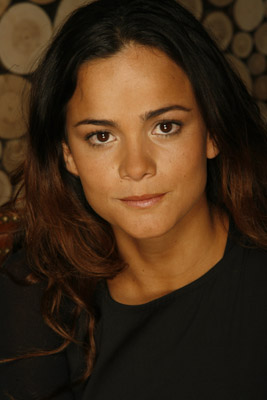
EC: You're getting to work with everybody!!
AB: Yeah, it's really nice! The director [Eric Eason]'s a really independent guy and filmmaker. His first film was Manito. It was really good experience. And now I'm going to start back to release that. I think it's fine. It's a really nice film, this one.
EC: You'll be here also for the screening of Sólo Dios Sabe?
AB: No, I won't be able because I'm going to be there doing press for that one. [A Journey to the End of Night is having its world premiere at the Tribeca Film Festival on Friday, the 28th.]
EC: Oh, well, then I'm really glad I caught you today!
AB: Talking about Dolores, she is the kind of people that seems tough but is really sweet inside. She just needed someone to grab her hand to get her together. I think she was a really nice character to do because it's about protecting yourself and trying to let it go. And it's something that we need to do nowadays because sometimes we're so, like, trying to protect ourselves from everything because the world is so hard with us. Sometimes we need to let it go and open the door for the destiny, or for a love.
EC: What was it like working with Diego Luna?
AB: Amazing! He's a really nice person. A really amazing actor and really giving and really sweet. I had a great time. I learned a lot from him. He's been an actor since he was a baby!
EC: What do you want to do next?
AB: I want to do theater! I haven't got a chance to do theater professionally. Just having classes and everything. So I want to do a bit of theater. I want to study, maybe coming to New York, or San Francisco. Just opening doors. And now I want to keep doing cinema, that is my passion, that is what I love. But theater! To grow up and keep going.
EC: Well, I have to tell you, I think you're heading for a brilliant career. I'm a gay guy myself but I could almost go straight for you!
AB: [Laughing] Thank you very much! That's BEAUTIFUL! I LOVE IT! [She gives me a big kiss.] I'm going to say like, "Now, you're going to be straight. I'm going to meet you in San Francisco and say, okay! Let's go for a beer!!"
Photos courtesy of Jeff Vespa, Wireimage.com. Cross-published at Twitch.
Subscribe to:
Posts (Atom)